02 9822 1872
 info@tileregrouting.com.au
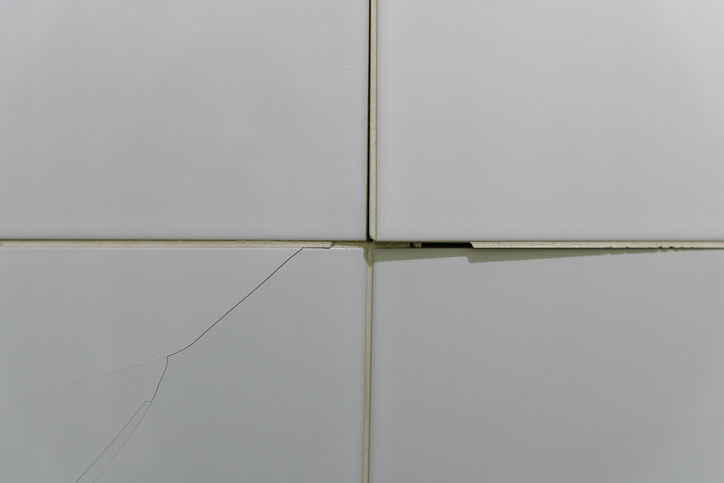
Looking after your bathroom and toilet is one of those household jobs that never really ends. As the NT Government’s bathroom cleaning guide points out, regular cleaning keeps these rooms hygienic and helps stop germs and mould from building up. Maintenance plays its part too. Clean tiles and well-sealed grout lines show that you care about how your home looks as well as how it feels to use.
However, even the best-kept bathrooms show their age eventually.
Bathroom tiles put up with daily foot traffic, water, steam and changes in temperature, so it is no surprise that cracks appear from time to time.
Some cracks come from movement in the subfloor or wall behind the tiles, while others start with poor installation, where hollow pockets are left because the adhesive did not fully cover the back of the tile. And sometimes the cause is as simple as a hair dryer, glass bottle or tool slipping from the shelf and landing on the floor.
Whatever the reason, a cracked tile usually leaves you wondering whether a simple repair will do or whether the tile needs replacing. In this post, we will look at the common types of cracks, which ones you can repair yourself, and which ones call for a professional inspection. Let’s get into it.
Common Types of Cracks in Bathroom Tiles
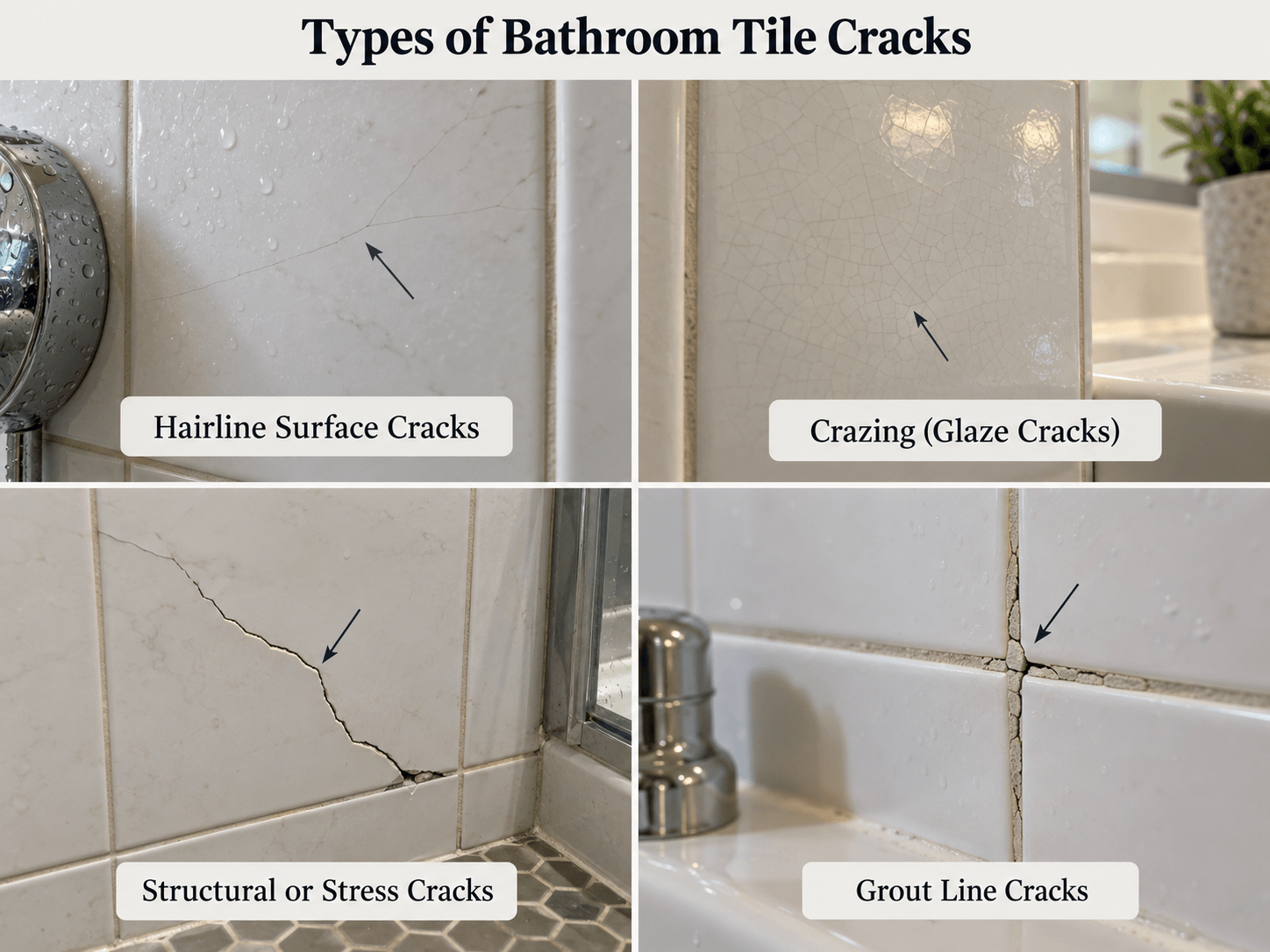
Not every crack means the same thing. These are the four types you are most likely to come across.
- Hairline surface cracks are very fine lines that sit on the surface of the tile and do not go all the way through.
- Crazing is a web of tiny cracks in the glaze, often seen on older ceramic tiles. It is mostly cosmetic, although it can make tiles harder to keep clean.
- Structural or stress cracks are wider, often run across several tiles, and usually point to movement underneath.
- Grout line cracks appear between tiles instead of across them, and are often a sign of ageing grout or slight movement.
How Different Tile Materials Crack
Each tile material reacts to stress, impact and moisture a little differently, which affects how well it can be repaired.
Ceramic Tiles
Ceramic tiles are softer than porcelain and more likely to chip or develop crazing in the glaze. Small surface damage can often be filled and colour-matched with good results, which makes ceramic tile crack repair one of the more manageable fixes for homeowners.
Porcelain Tiles
Porcelain tiles are denser and tougher, so when they crack it is usually because of a heavy impact or movement underneath. Minor porcelain tile crack repair is possible with a porcelain repair kit, while deeper cracks tend to need the tile replaced.
Natural Stone Tiles
Natural stone such as marble or travertine can sometimes be filled with a colour-matched resin. Stone is porous and varies in colour and pattern, so getting a seamless finish often takes a specialist.
With the tile type in mind, let’s look at when a crack is something you can fix yourself.
When is DIY Bathroom Tile Repair Possible?
So, can cracked bathroom tiles be repaired without replacing them? In many cases, yes. Minor surface-level hairline cracks, generally under 1mm wide, can be repaired using clear epoxy, resin or a colour-matched tile repair filler. Small chips that are mainly cosmetic can be filled with a coloured epoxy or a porcelain repair kit available from most hardware stores. These tile crack repair methods work best on tiles that are still firmly bonded and sit away from constant water.
It is worth keeping your expectations realistic. In wet areas, surface repairs are usually a temporary fix. Filling a crack improves how the tile looks, but it does not correct movement underneath or repair a damaged waterproofing membrane. If the same crack keeps coming back, that is your cue to look deeper.
Safety matters too. Broken tile edges are sharp, and removing a damaged tile can easily chip the ones beside it. If you are unsure and think these DIY tiling tips are overwhelming, it is always safer to have a professional handle the repair. A reliable local tiling and regrouting team can take care of the job for you, often in less time and with a neater finish.
When Does Replacement Seem Necessary?
Some cracks go beyond what a filler or repair kit can fix. Replacement or a professional assessment is usually the better path when you notice
- A crack wider than 2mm, or one that runs all the way through the tile
- Cracked shower tiles or cracks around the bath, where water can get behind the wall or floor and lead to hidden rot, mould and a damaged waterproofing membrane
- Cracks spreading across several tiles, which can point to movement in the floor or wall structure
- Stains or discolouration that remain after regular tile cleaning, which can mean moisture has worked its way into or behind the tile
- Dampness, staining or a musty smell near the cracked area, even after the bathroom has dried out
- Hollow or loose tiles that sound hollow when tapped or move when you step on them, which means the adhesive underneath has failed
In these situations, professional tile replacement helps make sure the damaged tile is removed safely, the surface underneath is inspected, and the new tile is bonded and sealed properly. If the damage turns out to be part of a larger renovation, keep in mind that the NSW Government sets licensing requirements for kitchen, bathroom and laundry renovation work, so it is worth using appropriately licensed trades.
Wondering what a repair might cost? Prices vary depending on the tile, the extent of the damage and access to the area. Our guide on the cost of regrouting a shower in Australia gives you a helpful starting point.
How to Help Prevent Bathroom Tiles From Cracking
Once your tiles are repaired or replaced, a few simple habits can help keep them in good condition for years to come.
- Handle heavy and pointed objects with care: Dropping items like hair straighteners, glass bottles or tools can chip or crack tiles, especially along exposed edges and corners.
- Avoid sudden temperature changes: Pouring boiling water onto cold tiles while cleaning can cause thermal shock, particularly on tiles that are not heat-treated. Warm water is gentler and works just as well.
- Choose the right grout: Grout should suit the tile type, the width of the joints and where it is going in the bathroom. Wet areas such as showers need a grout designed to handle constant moisture.
- Get the installation right: Tiles need full adhesive coverage, a stable base and properly placed movement joints so they can cope with the natural shifts in your home. If you are planning to tile yourself, our DIY tiling tips cover some of the most common mistakes and how to avoid them.
Consult Tile Regrouting to Ensure Your Bathroom Looks Its Best
A cracked tile can be a small annoyance or an early warning sign, and the difference is not always easy to see. That is where an experienced eye helps.
At Tile Regrouting, we have spent years helping homeowners across Sydney and Western Sydney bring tired and damaged bathrooms back to life. Our team handles bathroom tile repair, tile regrouting, silicone resealing and individual tile replacement with care, matching tiles and grout as closely as possible so your bathroom looks finished and feels right again. When we inspect a cracked tile, we look beyond the surface to check for loose tiles, failed grout and signs of moisture, so you know exactly what your bathroom needs before any work begins.
Whether it is a single chipped floor tile or a shower that has seen better days, our tile repairs in Sydney are designed to save you the cost and disruption of a full renovation wherever a repair makes sense. Contact Tile Regrouting today for a friendly inspection and an honest recommendation on whether to repair or replace.